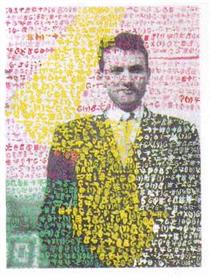
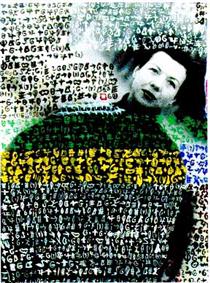
Paris, 1946 · a man stands up during a play and declares poetry finished · letters, not words
BENEATH THE LETTER
A twenty-one-year-old shouted down a Dada play and started a movement built from sounds instead of words. Twenty-two years later, its grandchildren wrote the slogans on the walls of Paris.
Words · KULTUR
In 1946, a young Romanian émigré named Isidore Isou stood up during a Dada performance in Paris and started shouting. He wasn't heckling — he was announcing that poetry was finished. Words themselves, he argued, had been worn smooth from overuse. The only way forward was to break language down past words, past syllables, to the letter itself.
Sound before sense
He called it Lettrism. A poem, to Isou, could be built entirely from sounds a mouth makes that aren't words at all — clicks, breath, grunts — performed like music, printed like art. It sounds like a joke. He meant it as a demolition.
Lettrism didn't stay contained to poetry for long. Isou and his circle turned the idea toward everything: paintings made from overlapping alphabets, films with sound and image deliberately unsynced, an entire proposed reorganisation of youth culture years before anyone used that phrase seriously. Most of it went nowhere. Some of it went everywhere.
In 1952, a younger and angrier faction broke away. They found the founders too polite — too concerned with art, not enough with attack. They kept the core idea intact: that language, and the city itself, could be cut up, redirected, turned into a weapon. They dropped the letters and kept the blade. They called themselves the Situationist International.
Sixteen years later, their slogans were on the walls of Paris during the largest general strike in French history. À BAS LA COCA-COLA. Never work. Be realistic, demand the impossible. The line runs straight back to a man shouting during a play nobody had asked him to be in.
The File — LETTRISM / PARIS: 1946, founded, mid-performance. Isou aged 21 at founding. 1952, Situationist split. '68, slogans on the walls.