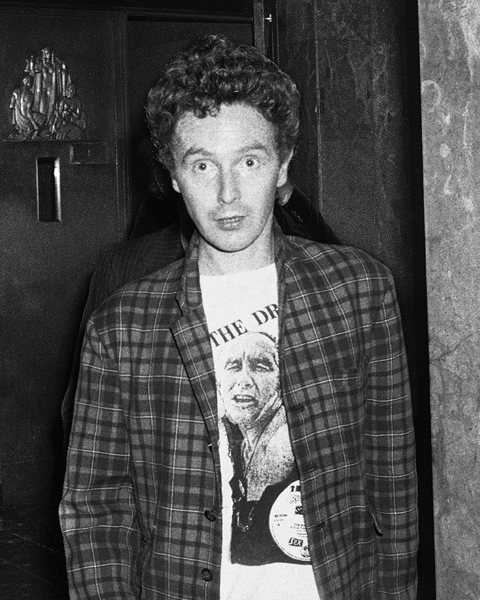
Wardour Street, 1976 · Bernard Rhodes · eight hundred thousand pounds · a cab fare
Lend Us a Fiver
Bernard Rhodes — co-manager of The Clash, old ally of Malcolm McLaren — tells the story of the day they nearly signed the whole of punk to one label. The day Malcolm turned down £800,000 and walked out of Columbia Records to borrow five pounds for the cab home.
Interview · Bernard Rhodes in conversation
Set the scene. You and Malcolm. What was the dynamic?
The big difference between Malcolm and myself is this — Malcolm and I knew each other way back in the '60s. We spent years together, worked together, and we worked fantastic together. Out of it came terrific things. The difference between us, why it worked, is that he always wanted to be part of the establishment and felt that he wasn't allowed in, although he was great. And I never wanted to be part of the establishment. I always wanted to be the alternative. I thought that was a great place to be. So dynamic, worked good together.
So what happened that day on Wardour Street?
I had this meeting with someone from the establishment — but not really, because he was a crazy guy. He was sent from America to set up Columbia Records here. His name was Maurice Oberstein. Going into the history of the guy, he was an interesting guy, he just wanted to run it like — forget it, do what you like.
So I was walking down Wardour Street, I was quite early, and I bumped into Malcolm. And Malcolm looked really depressed. Normally he's quite a happy guy. So I said, what's the problem? We went for a coffee. We used to work on ideas all the time — I'd come up with something, he'd add to it, he'd come up with something, I'd add to it. And we came up with this idea to start a record label and put all these unknown groups onto it. Mainly down my studio — the Sex Pistols, The Clash, loads of different groups. Onto one label.
And you just walked in?
We went round there and just walked straight to the lift and went upstairs. The receptionist wasn't too happy. We went in and we put it to him — this label. Game over for everything.
So Obi's sitting there, and he said, “Okay guys, how much is it gonna cost?” And Malcolm said, “A million pound.” Well, in '76 a million pound was a lot of money. A million pound's a lot of money now. Twenty pound's a lot of money.
Obi thought about it, did some notes, calculated and whatnot. And he said, “I'll give you 800,000.” Malcolm said to me, “No, we're walking out. I want a million. If I don't get a million, that's it.” So we got downstairs and Malcolm says — “Bernard, lend us a fiver.” I said, “What do you want a fiver for?” He said, “The cab fare home.” The cab fare home. And I said, “Do you know you just turned down 800,000 pound?” He said, “Did I?”